A fallen leaf, waiting to be lit
Every year as the rains end and the dry season sets in, fallen Tong Tueng leaves pile up thick across the forest floor of Tambon Khilek, Mae Rim — dry fuel waiting for a match. Each year, smoke from burning that leaf litter settles over the whole valley, feeding the PM2.5 that everyone here breathes.
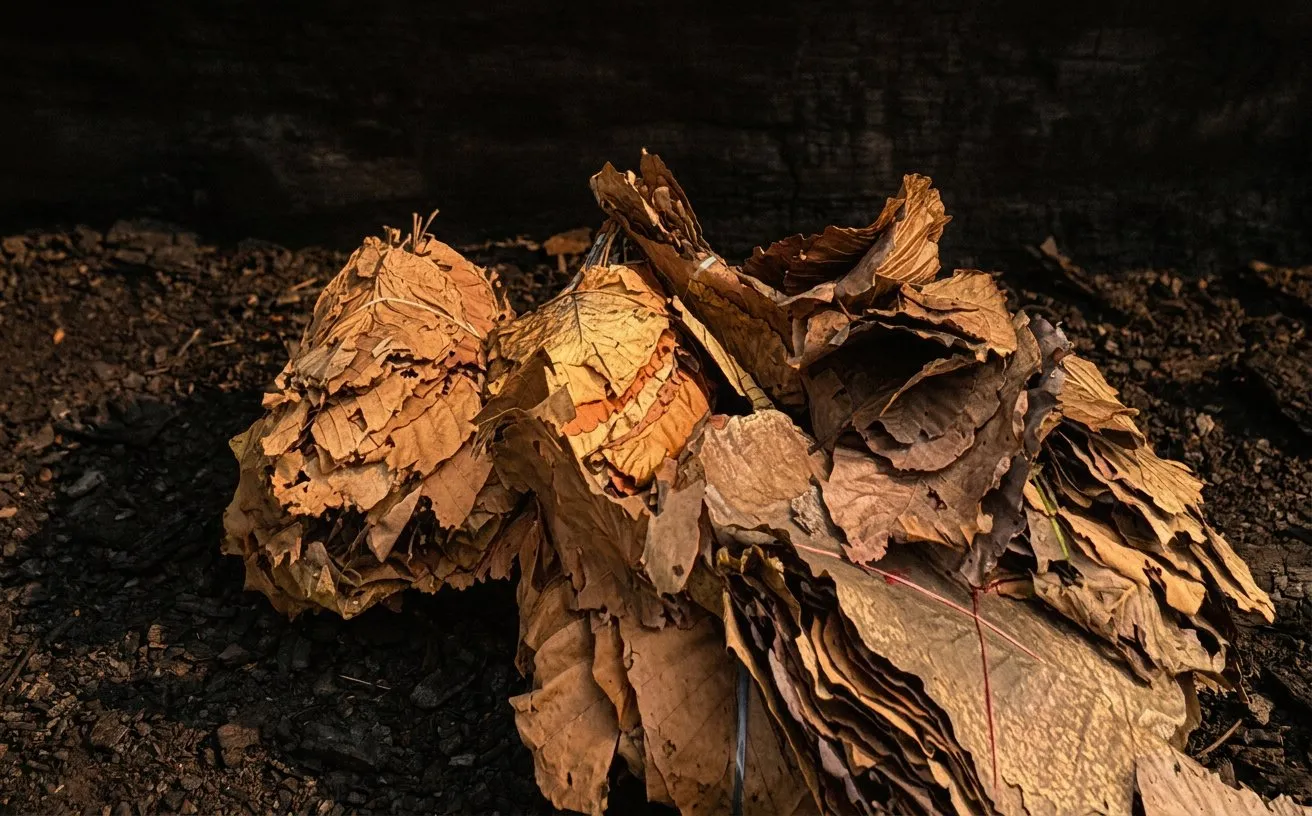
NS-TT-142 · Dipterocarpus obtusifolius
What if this leaf never had to burn again
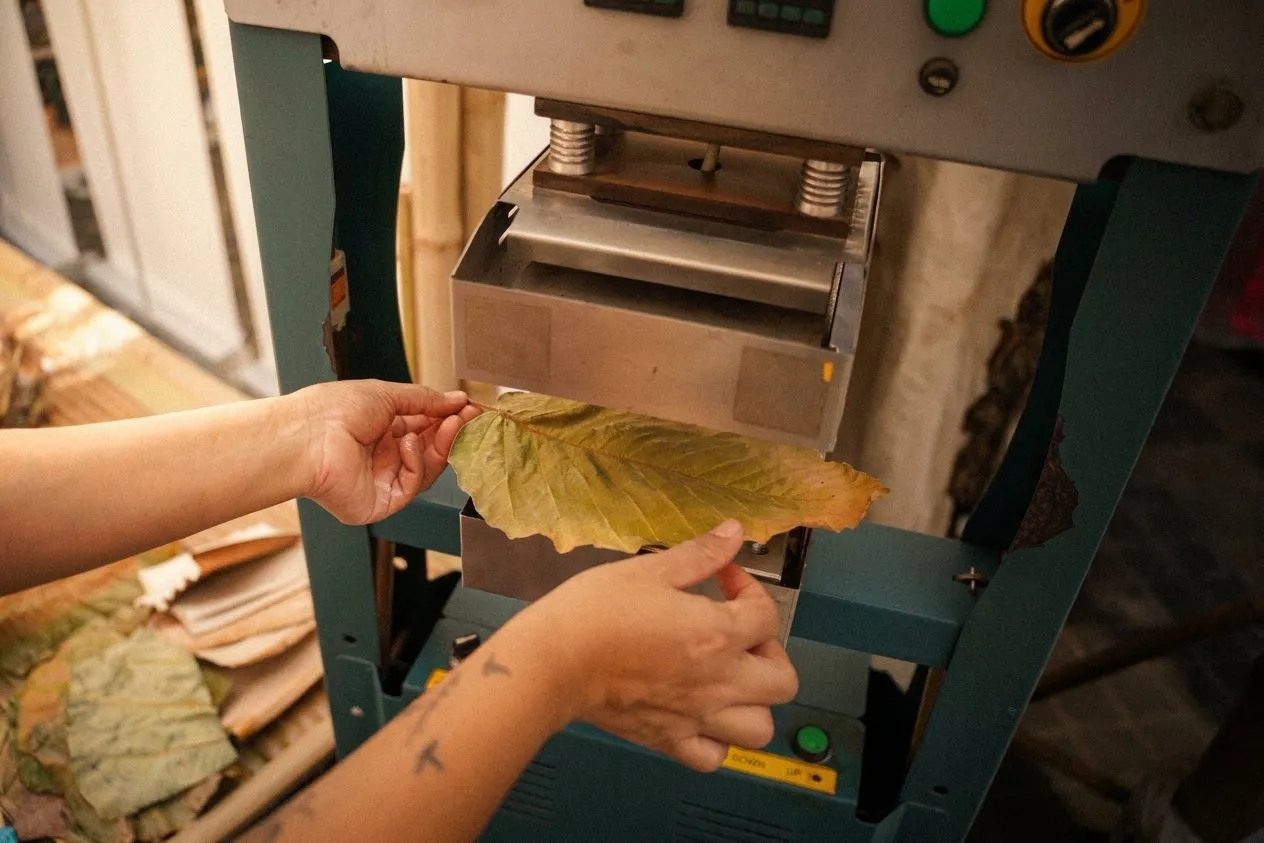
What if that same Tong Tueng leaf, instead of waiting to be burned, was collected, washed, dried, and pressed with heat into something to hold food? The heat that once meant wildfire now lives inside a hot press, shaping a leaf into a plate — fire that once destroyed, now used to make.
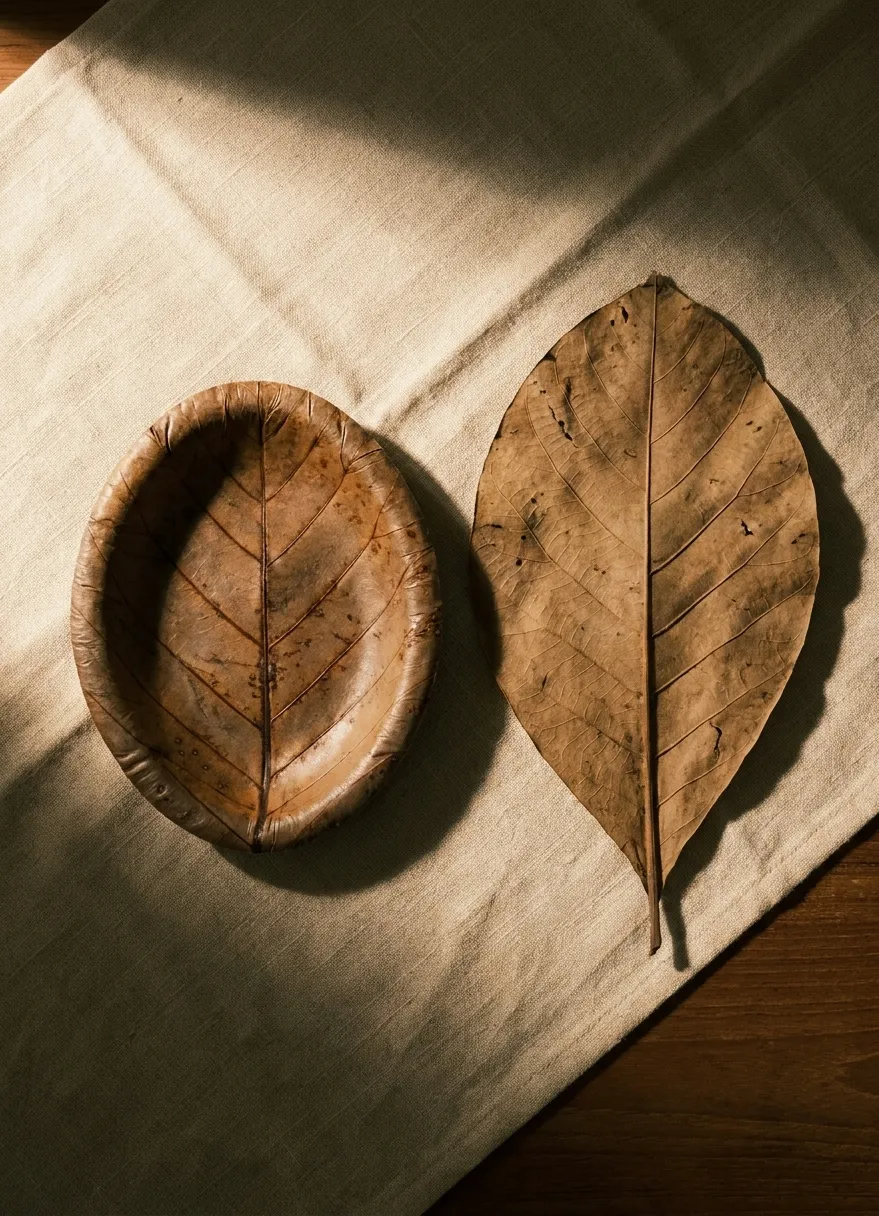
Washed, dried, pressed — one leaf at a time
Every leaf we collect is washed and sun-dried until fully dry, then set into the hot press and pressed by hand, one leaf at a time. No machine can replace the eye and hand that press it — every leaf carries its own grain and shape, so no two are alike. Every plate that comes out of the press carries its own specimen number, like a piece catalogued in a museum.
Income, where there used to be only smoke
Every Tong Tueng leaf NaiSuan uses is bought from the local community — people who walk the community forest to gather it and bring it to us. It's extra income that never existed before, in the exact place that once held nothing but smoke. Today it holds income from leaves that simply fell.
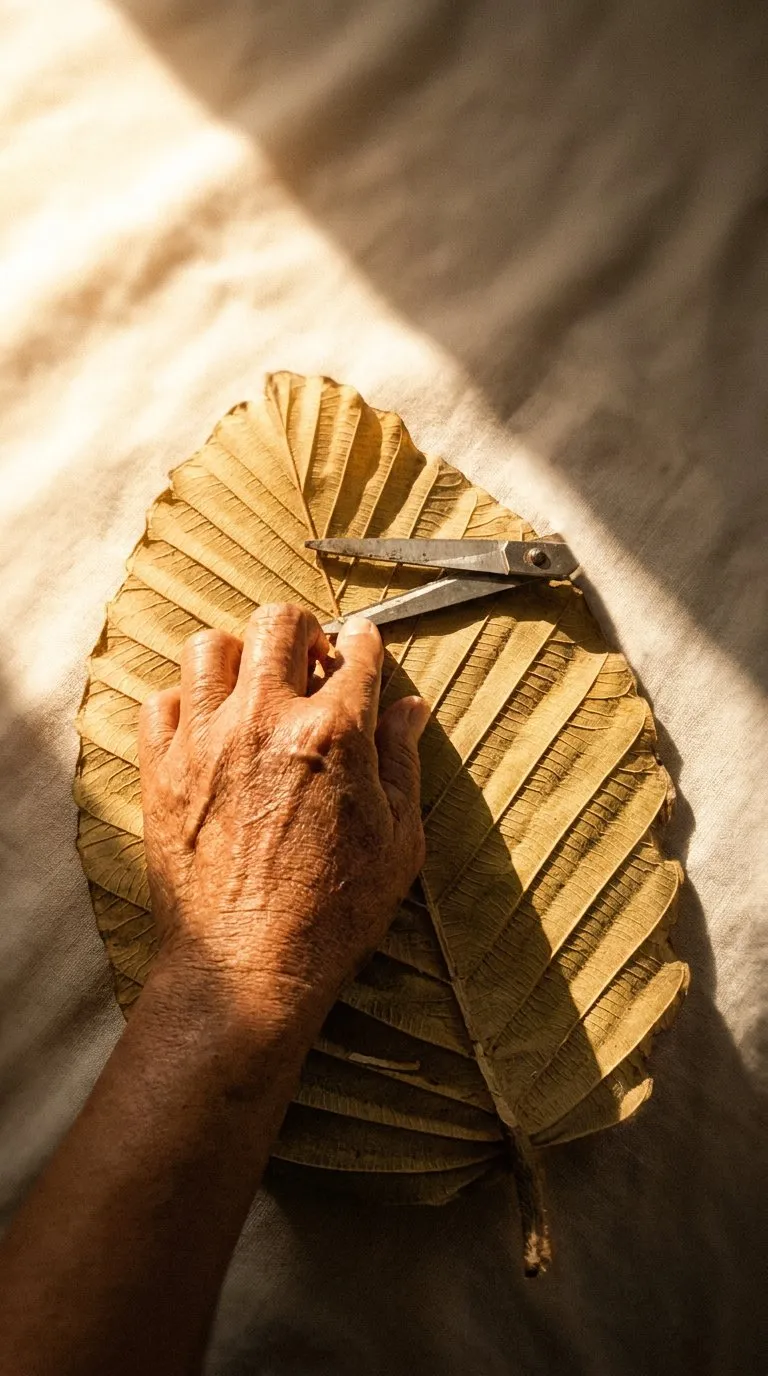
NS-TT-780 · Mae Rim community
From the Mae Rim forest, to tables across the city
From the Mae Rim forest to tables in the city — leaf plates shaped by the community's hands and NaiSuan's press now carry breakfast at hotels, sit on trays in restaurants, and travel as corporate gifts that say more than just "eco-friendly."
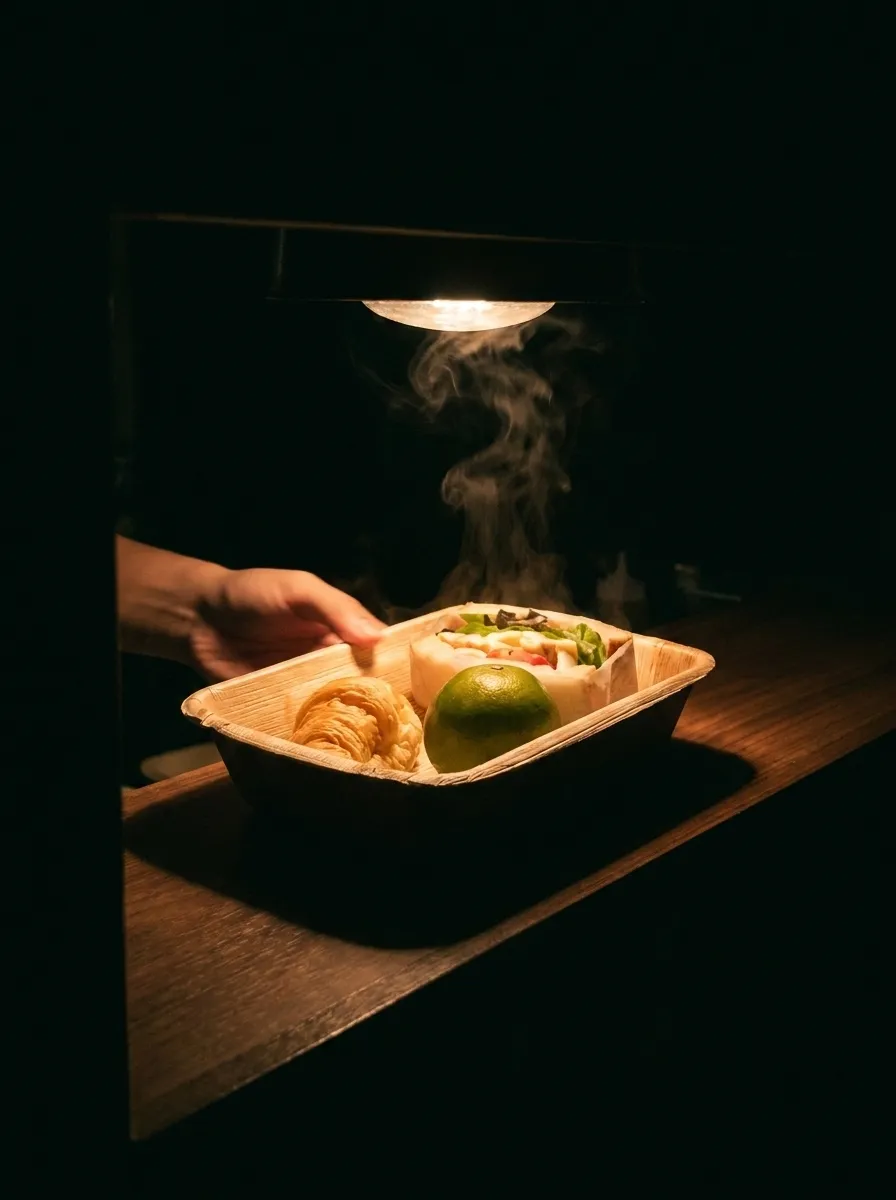
NS-TT-686 · Restaurants · hotels